
Most turning enquiries we receive from machine builders and manufacturers are not about spectacular one-off parts. They are about repeat rotational components: bushings, spacers, pins, shafts and threaded parts — needed in dozens and hundreds of pieces, every month or every quarter. In this article we use photos from our shop floor to show which CNC turned parts we produce in series, in which materials, and how we make sure the hundredth piece matches the first.
Which turned parts we produce in series
A turned part is any component whose main surfaces are rotational: outside diameters, bores, faces, threads, grooves and undercuts. In series we most often make:
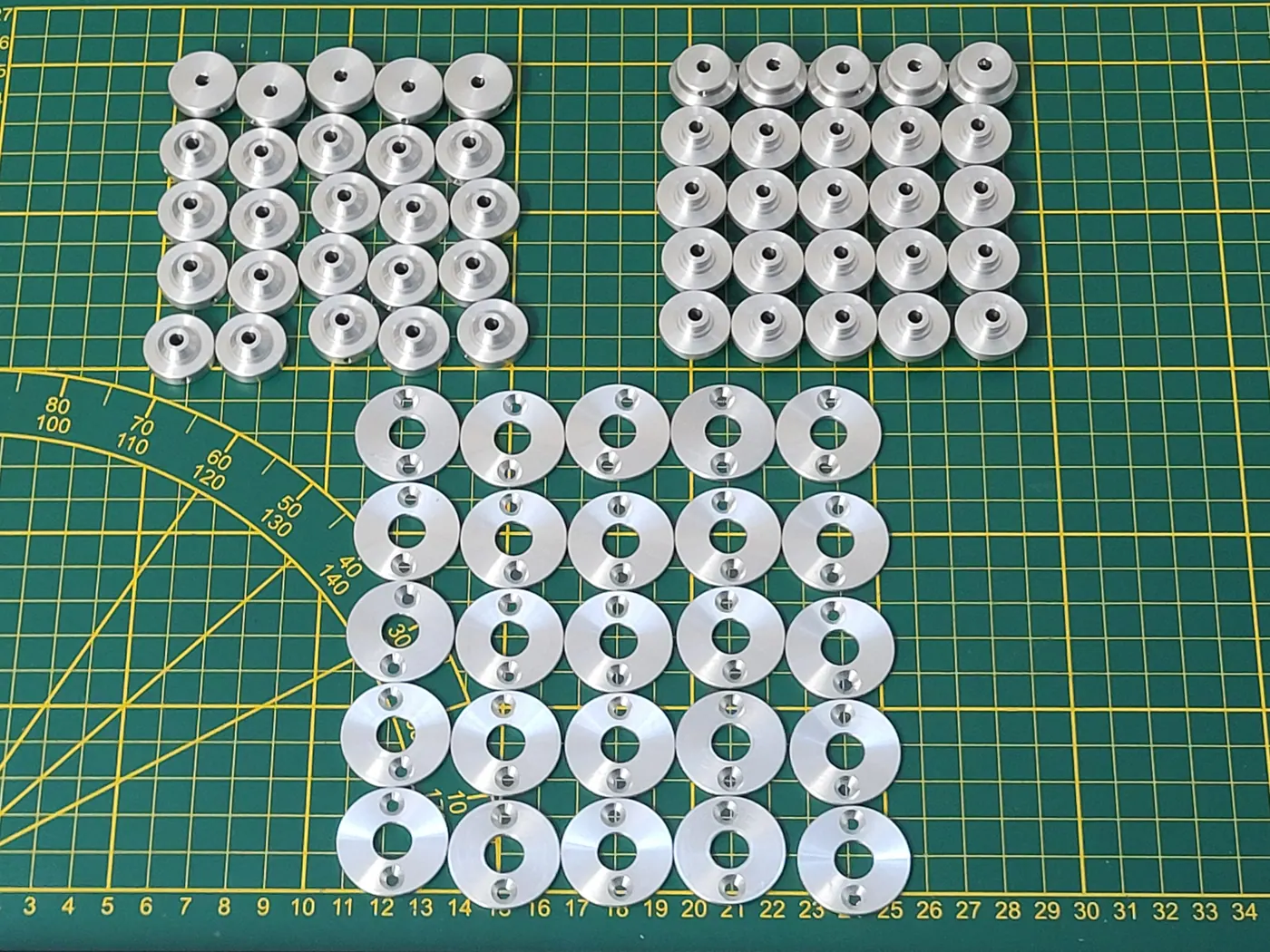
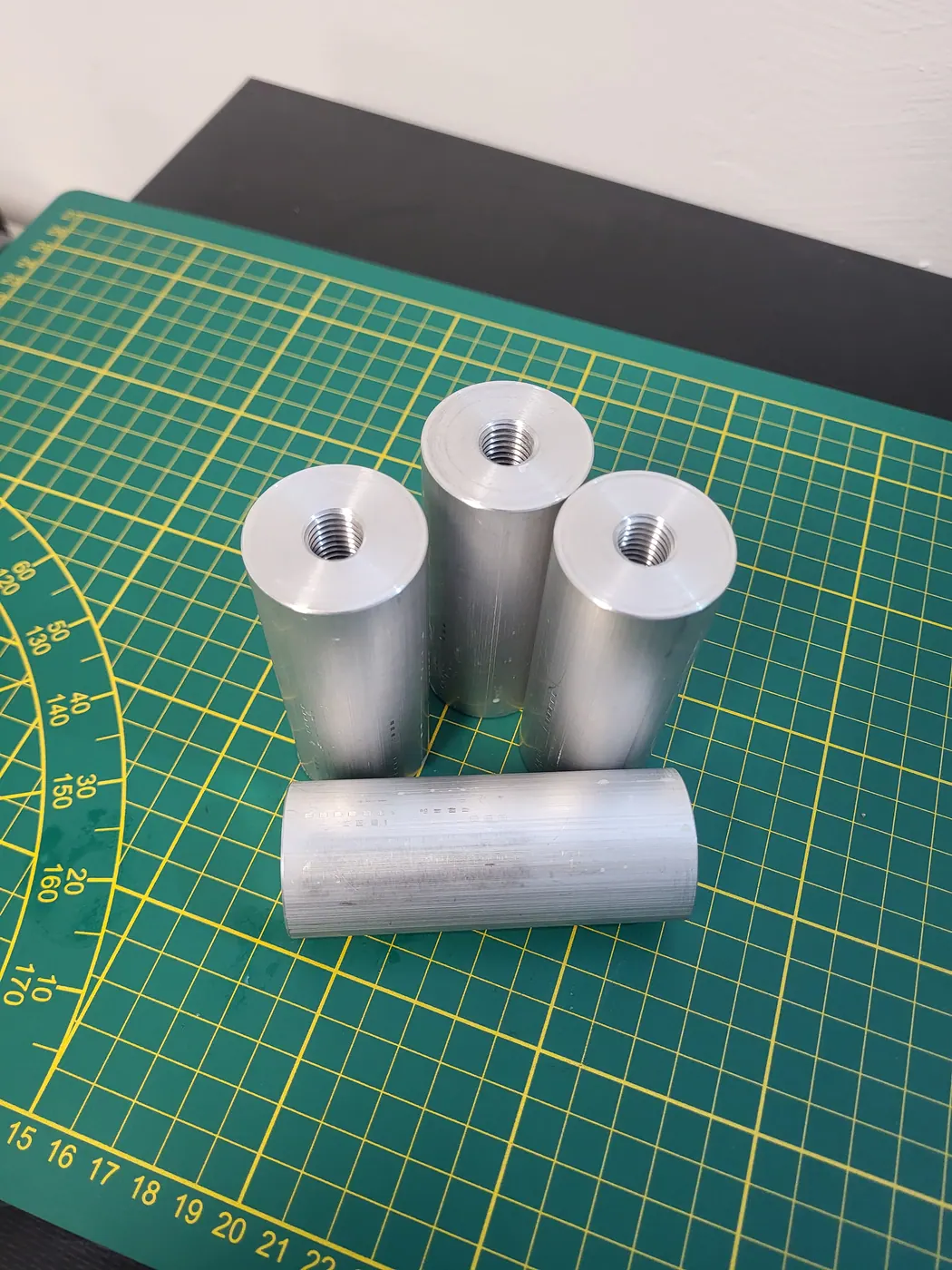
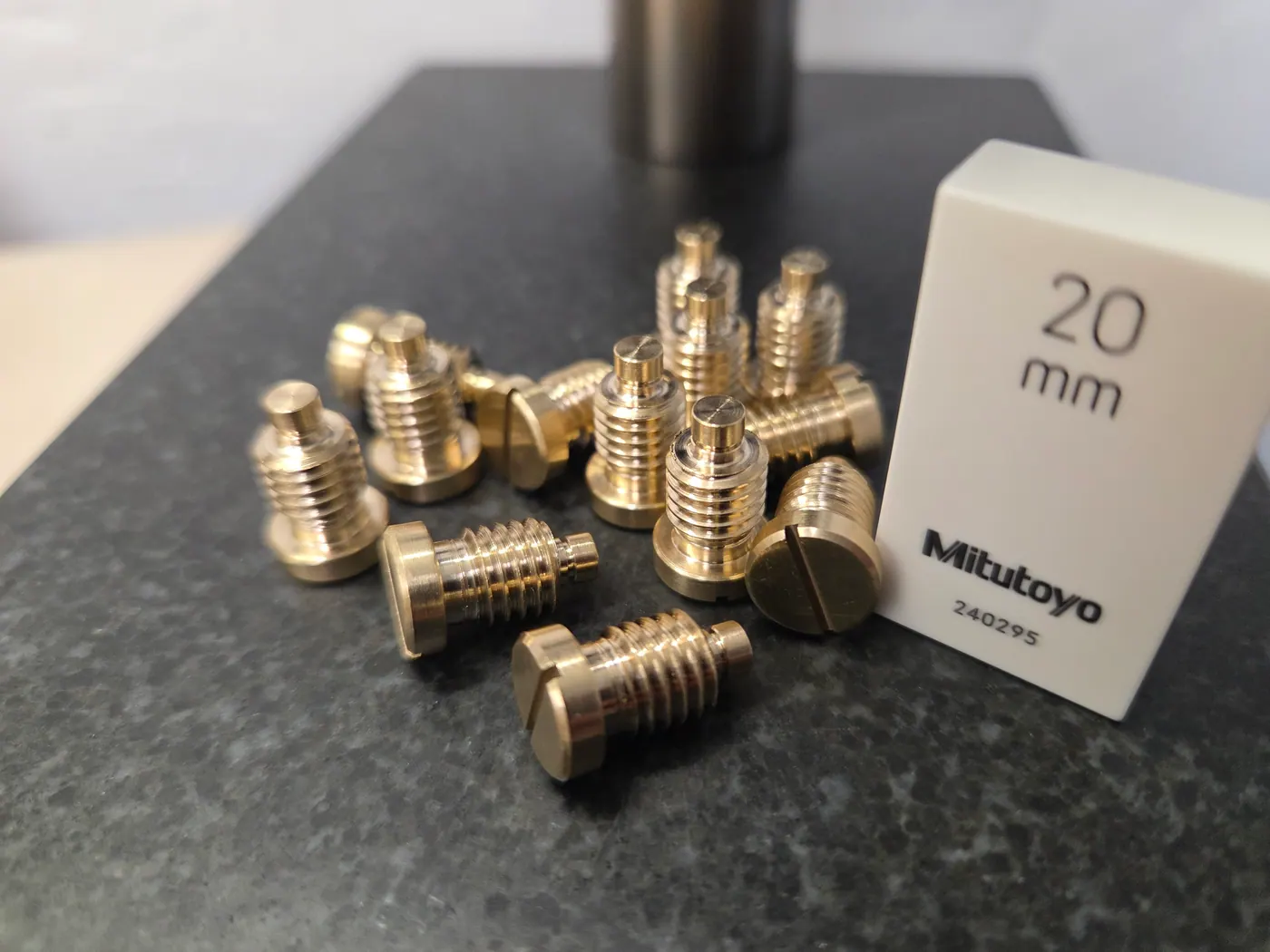
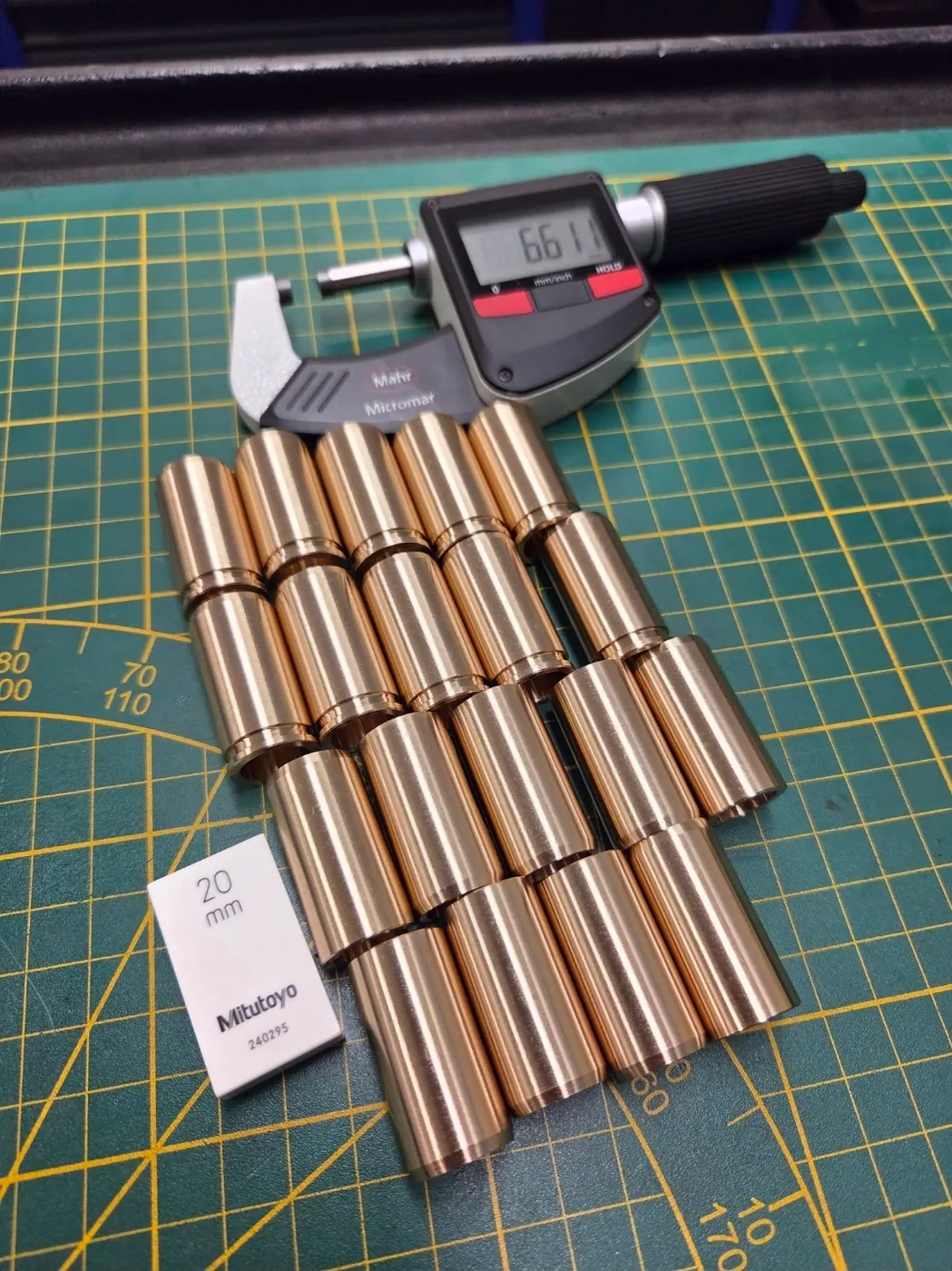
- bushings and spacers — plain, chamfered, with internal or external threads, in sizes you will not find in a catalogue,
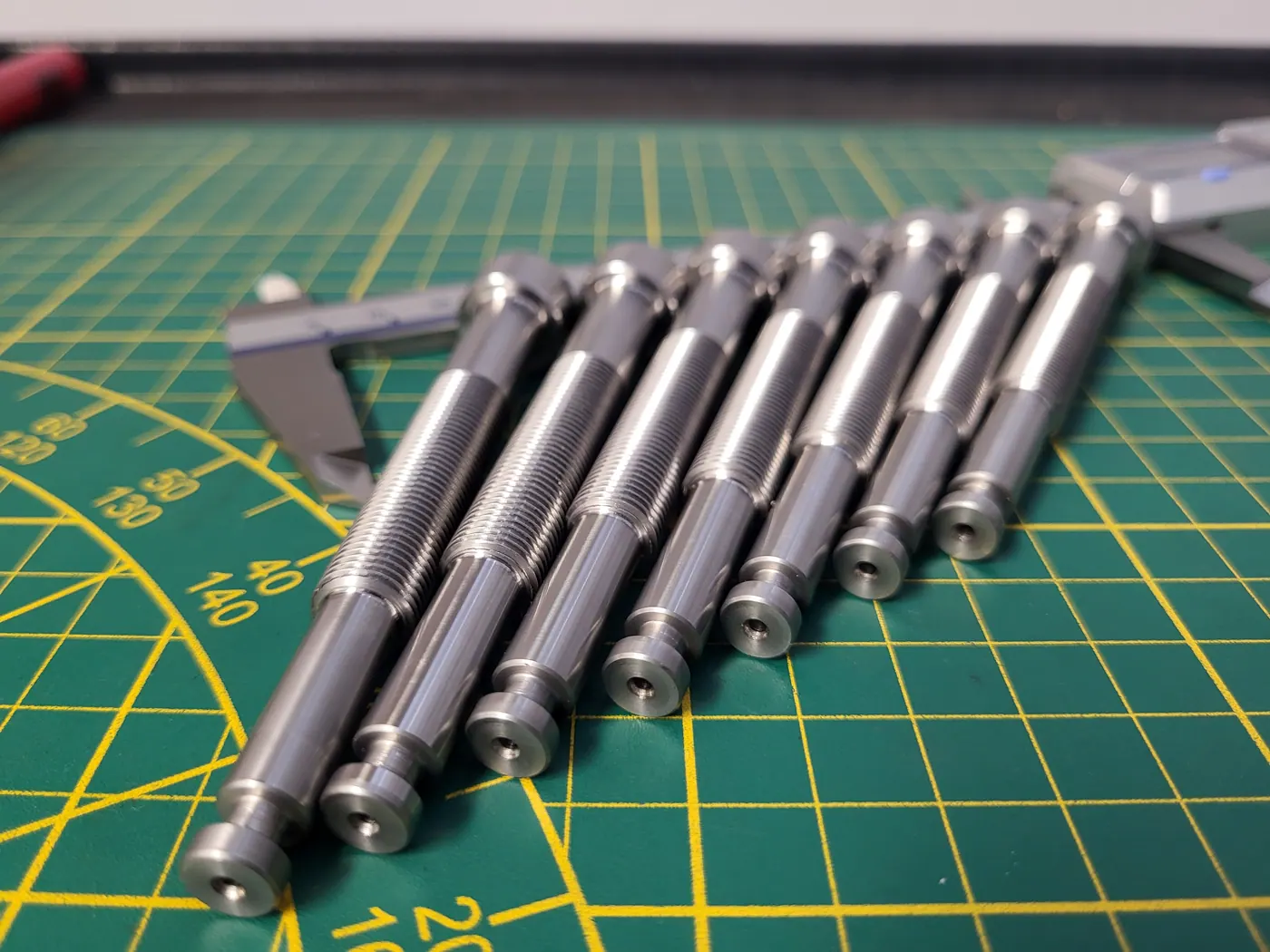
- pins, dowels and studs — with threads, circlip grooves or cross holes,
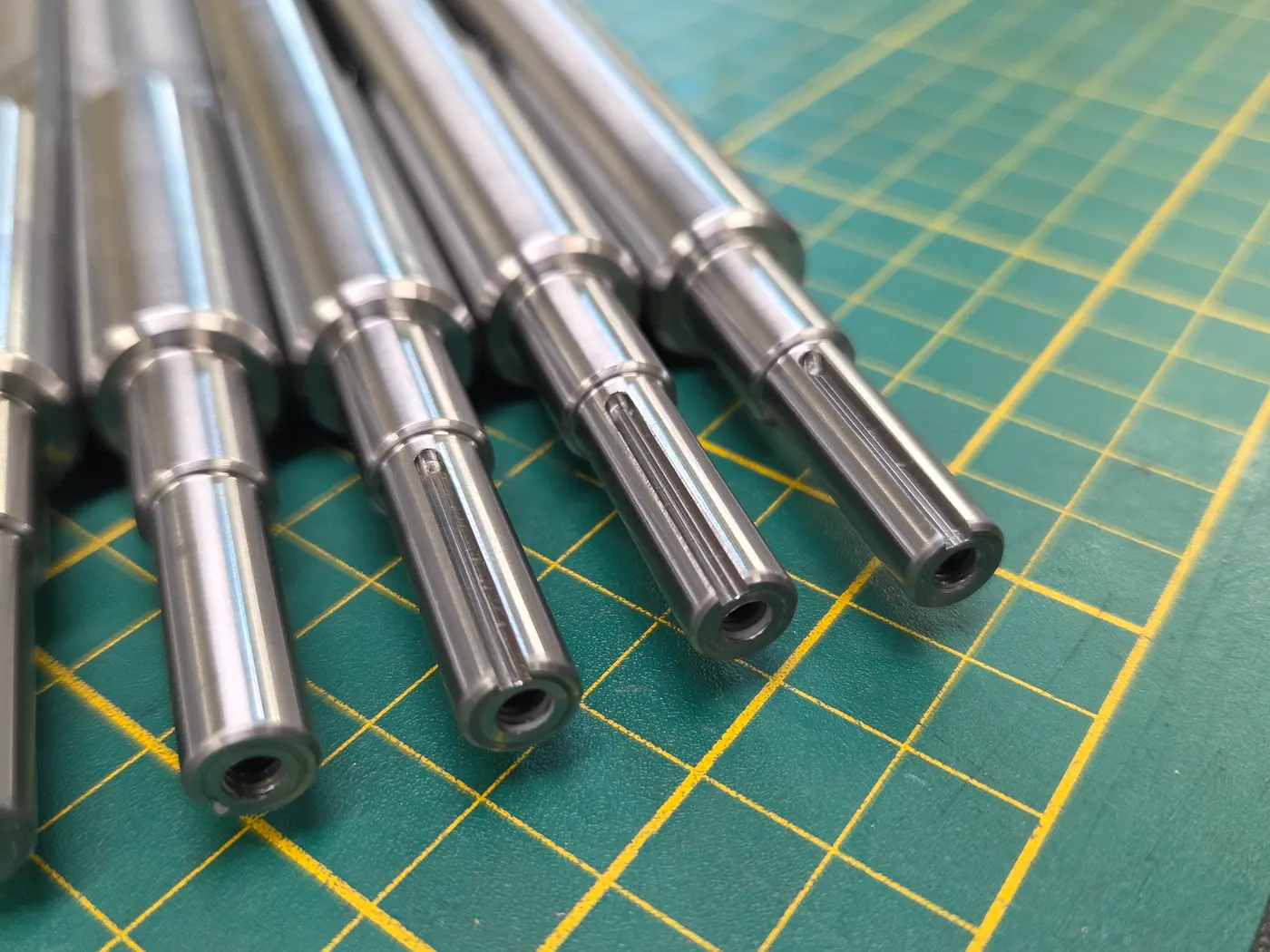
- stepped shafts — with several diameters, bearing seats and centre holes,
- threaded parts and fittings — plugs, special screws, connectors,
- bronze plain bearing bushings — see our separate article on custom bronze bushings,
- washers, rings and discs — flat rotational parts with holes.
Materials
The material follows from the drawing and the part's function, but it also affects price and machining time. We most often turn:
| Material | Typical parts | What to watch |
|---|---|---|
| Aluminium | spacers, discs, housings | light and fast to machine; allow for coating thickness in tolerances when anodising |
| Carbon steel | pins, shafts, studs | with heat treatment, agree the order of operations and grinding allowance |
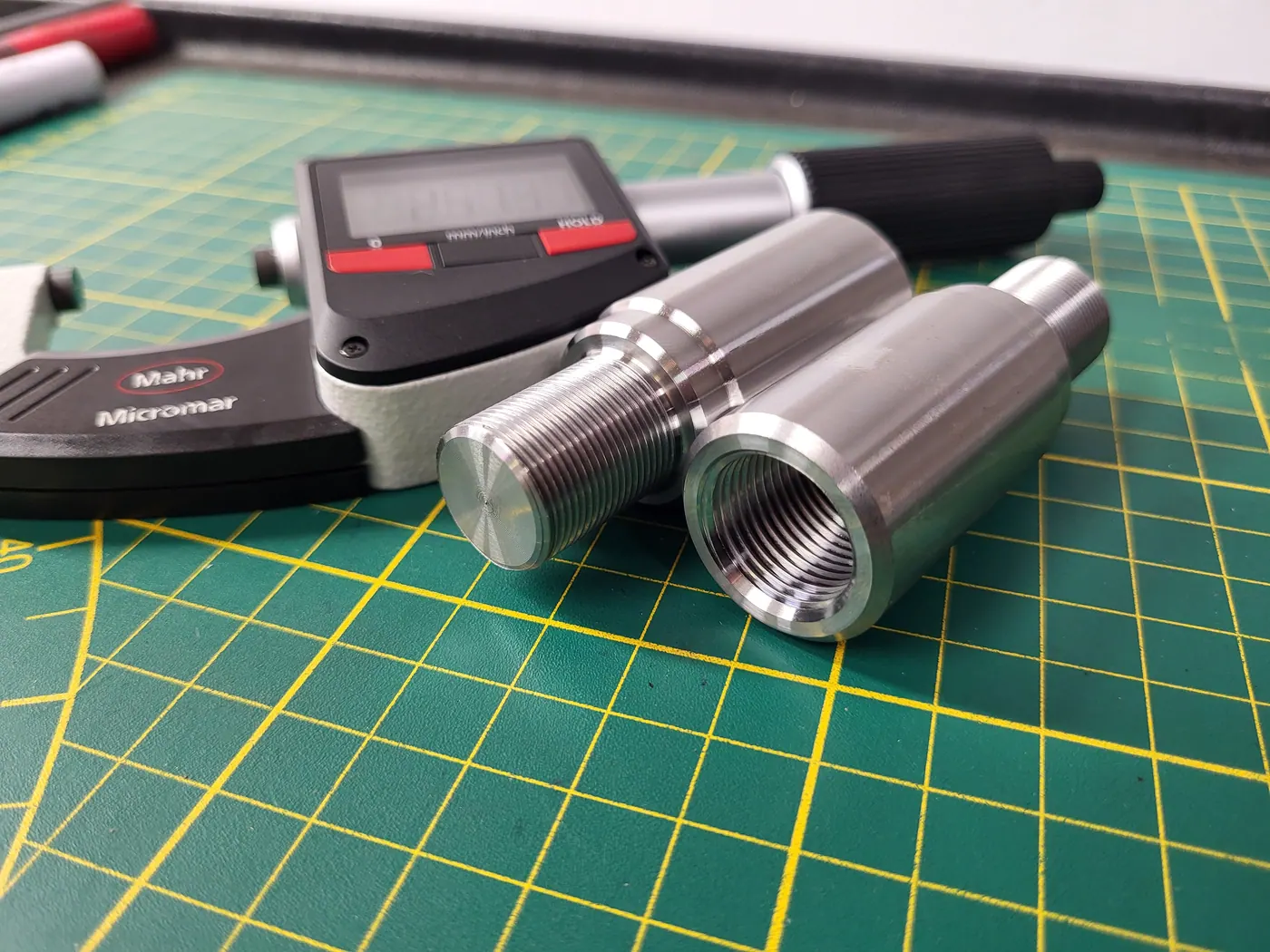
| Stainless steel | shafts, fittings, food-industry parts | slower machining and higher tool wear — higher unit cost |
| Brass | plugs, special screws, connectors | excellent machinability, clean threads, well suited to large runs |
| Bronze | plain bearing bushings | press fit and bore closure after pressing in |
| Plastics | sleeves, guides, insulators | thermal expansion and flexibility when clamping |
If the material is still open, our guide on choosing a material for CNC parts will help.
Size range
On CNC lathes we turn parts up to Ø 350 mm and 2500 mm long. That covers the vast majority of series parts — from sleeves a few millimetres in diameter to shafts over two metres long. Larger parts, up to Ø 840 mm and 3000 mm long, are turned on conventional lathes; these are usually one-offs and short runs.
When the drawing calls for accuracy or surface finish beyond turning — typically bearing seats or fitted bores — the part goes on to grinding after turning. We do this in-house, so the series never waits for a subcontractor. Machine capacities are listed on our CNC turning page.
How we keep a series repeatable
A series is good when every piece is in tolerance — not just the first one. That is why our process looks like this:
- Trial batch — the first pieces are made with the final process and critical dimensions are measured; results go into an inspection report. We describe the whole mechanism in our article on trial batches and inspection reports.
- Frozen process — after approval, the program, tools and workholding are assigned to the part. Repeat batches, even months later, are made on the same set.
- In-process checks — critical dimensions are checked with calipers and micrometers; runout, heights and parallelism with a dial indicator on a granite surface plate, referenced to gauge blocks.
Packing and delivery
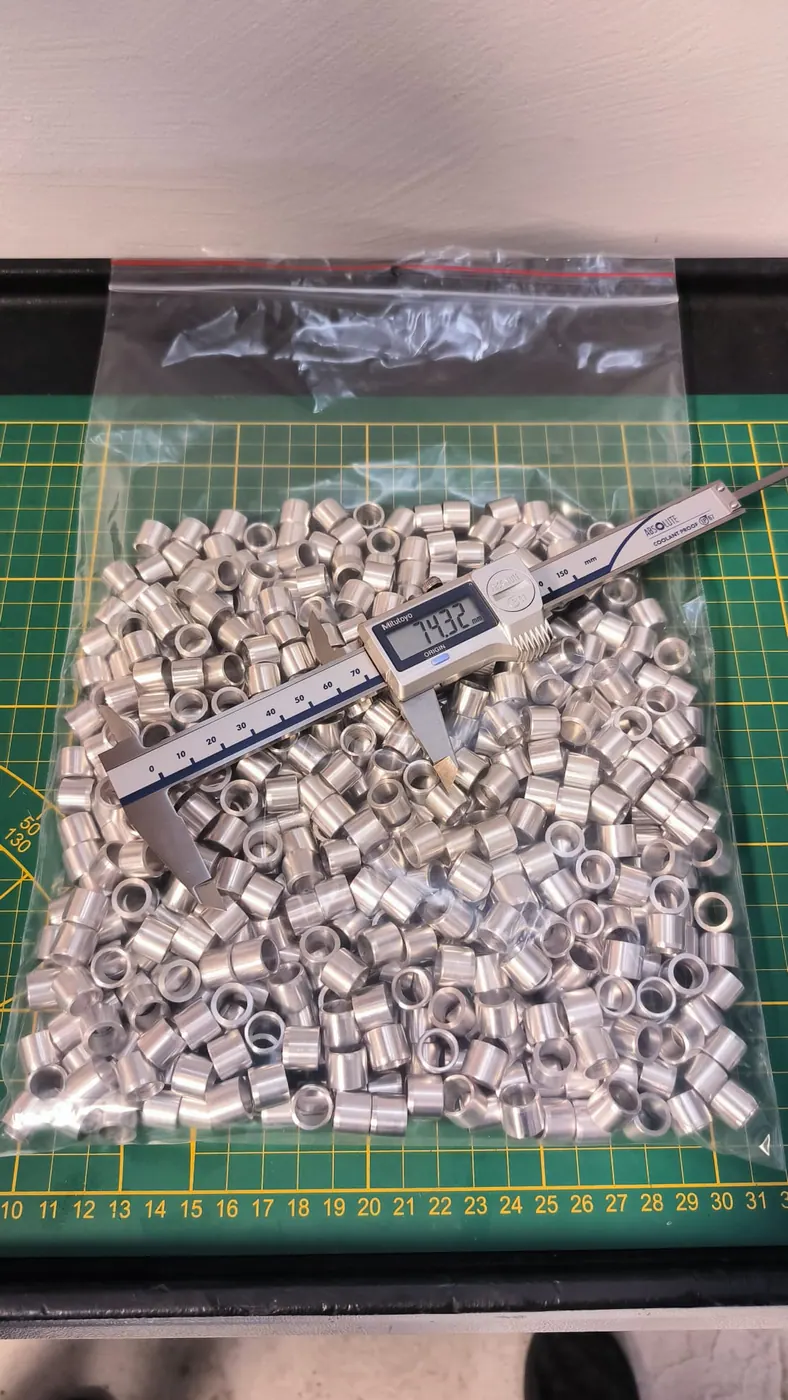
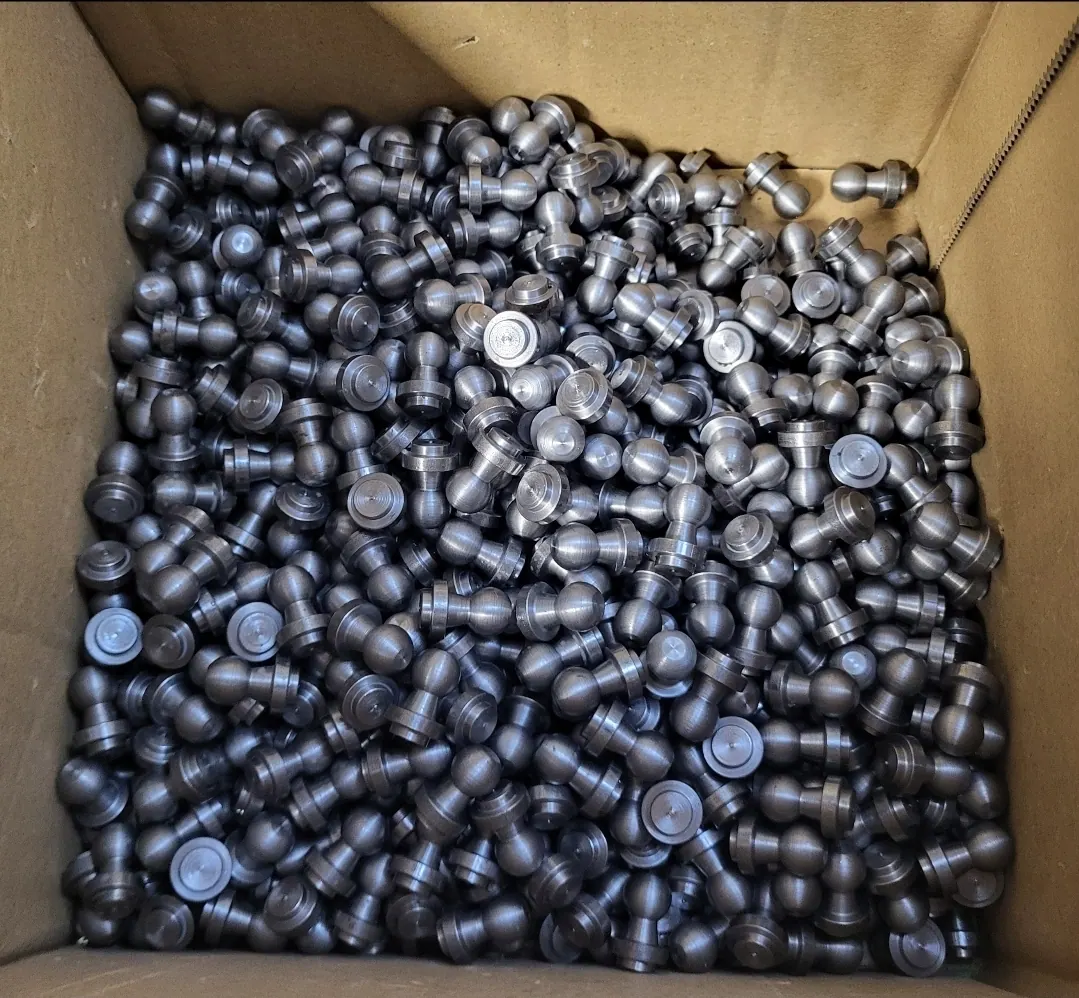
Series parts are packed in batches labelled with the quantity — small parts in zip bags, larger ones in cartons. Nobody at goods-in has to count or sort. We deliver within Poland and abroad; from Zbąszyń most addresses in Germany are reached within 24–48 hours.
What to send for a quote
For a firm quote rather than a ballpark figure, we need:
- the technical drawing with tolerances and surface finish, ideally with a 3D model (STEP),
- the material — the grade, or the requirements we should select it from,
- quantities — batch size and estimated annual demand; these drive the process and the price,
- finishing — anodising, zinc plating, hardening, if required,
- documentation requirements — inspection report, material certificates.
The full list is in our article on which files to send for a CNC quote.
Summary
CNC turned parts in series are everyday work on our shop floor: bushings, spacers, pins and shafts in aluminium, steel, brass, bronze and plastics, turned up to Ø 350 × 2500 mm, measured throughout the run and packed by quantity. If you are looking for a supplier for repeat series, see how our CNC series production works — or send your drawing straight away; we reply within 48 hours.
FAQ
From what quantity does CNC series turning make sense?
There is no fixed threshold. Programming and set-up costs are spread over the quantity, so the larger the batch, the lower the unit price. For parts that repeat regularly, batches of a few dozen already pay off, because the program and fixtures are ready for every repeat order.
What is the maximum size of your turned parts?
On CNC lathes we turn parts up to Ø 350 mm and 2500 mm long. Larger parts, up to Ø 840 mm and 3000 mm long, are turned on conventional lathes — typically one-offs and short runs rather than volume production.
How do you check dimensions during a series?
The first pieces are measured across all critical dimensions and documented in an inspection report. During the run we check critical dimensions with calipers and micrometers, and where needed with a dial indicator on a granite surface plate referenced to gauge blocks.
Do you make spacers and sleeves to drawing?
Yes. Spacers and sleeves in non-catalogue sizes, with internal threads, chamfers or undercuts are among the most common parts in our series. A drawing with dimensions, material and quantity is all we need.
What if a part needs better accuracy than turning can deliver?
Surfaces with tight tolerances or low roughness — such as bearing seats on shafts or fitted bores — are ground after turning. Grinding is done in-house, so the part does not travel to another subcontractor.
Related topics
Trial batch and inspection report — how first-series acceptance works
The first series with a new supplier does not have to be a leap of faith. A trial batch with an inspection report is the standard mechanism that removes the risk for both sides.
Read the articleTolerances and surface roughness in CNC turning — what really costs
Which IT grades and what surface roughness a CNC lathe realistically achieves, when grinding becomes necessary, and how to tolerance a shaft drawing so you do not overpay.
Read the articleHow to prepare a shaft or bushing for a CNC turning quote
A checklist for rotational parts: what must be on a shaft or bushing drawing, which gaps most often delay the quote, and which information is mandatory versus nice to have.
Read the article